
TikTok Malaysia POS Integration: Building a Unified Commerce Strategy for Retail Success
The Malaysian retail landscape is undergoing a seismic shift. As social commerce becomes the new frontier for customer engagement, retailers face an unprecedented challenge: how to seamlessly integrate explosive TikTok Shop growth with traditional brick-and-mortar operations. With TikTok Shop recording over 100 million daily product searches in Malaysia and Malaysia’s total social commerce market forecasted to reach $1.36 billion in 2025, with projections to reach $2.87 billion by 2030, the message is clear—retailers who fail to adopt a unified commerce strategy risk being left behind.[1][2][3][4]
This comprehensive guide explores how Malaysian retailers can build a robust unified commerce ecosystem that connects TikTok Shop with point-of-sale (POS) systems, creating seamless shopping experiences that drive revenue growth and customer loyalty. From real-time inventory synchronization to live commerce strategies, we’ll unpack the essential components of successful TikTok Shop integration.
Understanding TikTok Shop’s Impact in Malaysia
TikTok Shop has transformed from a novelty platform into a commerce powerhouse that’s reshaping how Malaysians discover and purchase products. The numbers tell a compelling story of exponential growth and consumer adoption.
The Malaysian Social Commerce Boom
Malaysia’s social commerce market is projected to reach $1.36 billion in 2025, growing at 21.8% year-over-year, with forecasts indicating the market will hit $2.87 billion by 2030. TikTok Shop sits at the epicenter of this revolution, with growing local sellers and affiliate creators.
The platform’s influence extends far beyond simple transactions. According to research, 87% of TikTok users purchased a product after seeing it on the app in the past 3 months. This “see it, want it, buy it” model has fundamentally altered consumer behavior, particularly among Gen Z.[17]
Shoppertainment: The New Shopping Paradigm
TikTok Shop’s success in Malaysia stems from its pioneering “shoppertainment” approach—merging entertainment with commerce. The platform recorded over 140% year-on-year sales growth during the 6.6 Sale in June 2025, while Ramadan and Raya festivities in March saw over 100% YoY sales uplift.[2][1]
Malaysian shoppers aren’t just browsing; they’re engaging. The integration of features like 30-Day Free Returns triggered an 80% surge in conversion rates, while TikTok PayLater fueled a 60% increase in Average Order Value (AOV) throughout the first half of 2025. These figures underscore why retailers must view TikTok Shop not as an optional sales channel, but as a critical component of their commerce strategy.[1]
The Case for Unified Commerce in Retail
Before diving into TikTok Shop integration specifics, it’s essential to understand why unified commerce has become the gold standard for modern retail operations. Traditional omnichannel approaches, while better than siloed systems, still fall short of delivering truly seamless experiences.
Omnichannel vs. Unified Commerce: Understanding the Distinction
Many retailers mistakenly believe that having multiple sales channels automatically qualifies them as “omnichannel.” However, true omnichannel retail requires connected touchpoints, while unified commerce goes several steps further.[6][7]
Omnichannel commerce connects various channels—physical stores, e-commerce websites, social media—allowing customers to switch between them. However, these channels often rely on separate systems that share data through integrations, creating potential delays and inconsistencies.[6]
Unified commerce creates a single source of truth by integrating both customer-facing channels and backend operations through one platform. Your e-commerce platform, POS system, inventory management, order fulfillment, and customer data all work as one unified system.[7][6]
The distinction matters tremendously for operational efficiency. Research shows that retailers migrating to unified commerce platforms can reduce operating costs by up to 47% while eliminating the challenges of managing separate systems for inventory, sales, and customer data. Some implementations have transformed multi-step order management processes into single actions, reducing staff time by 50+ hours per week.[6]
The Real-Time Data Advantage
Industry experts emphasize that unified commerce isn’t just about collecting data—it involves using data to streamline operations and ensure every part of the organization aligns with customer needs. Real-time data integration enables retailers to bridge the gap between omnichannel strategy and customer experience.[8]
In markets like Klang Valley and Johor Bahru, where nearly everyone is online, features like Next Day Delivery and 30-Day Free Returns have led to conversion rates surging by up to 80%. This level of responsiveness is only possible when systems communicate in real-time, eliminating the data silos that plague traditional omnichannel setups.[9][10][6]
Why TikTok Shop Integration is Critical for Malaysian Retailers
The explosive growth of TikTok Shop in Malaysia presents both an enormous opportunity and a significant operational challenge. Retailers who successfully integrate TikTok Shop with their existing infrastructure position themselves to capture exponential growth; those who treat it as a standalone channel risk operational chaos.
The Volume Spike Challenge
One of the most understated aspects of TikTok Shop success is the operational strain it creates. During viral live streams, Malaysian retailers have reported order volumes increasing 50-500x normal rates within minutes.[11]
A beauty brand owner in KL shared: “During my first viral live stream, I sold 3,000 units in 2 hours. My normal fulfillment could handle maybe 50 orders per day. The demand from the Malaysia TikTok Shop live stream fulfillment was 60 times my capacity. We shipped orders for three weeks, had hundreds of complaints, and lost money despite huge sales”.[11]
Analysis of over 400 Malaysian TikTok Shop live streamers reveals a shocking 73% failure rate in order fulfillment, with common breakdowns including:[11]
- Inventory shortage after overselling: 34% of failures
- Processing delays overwhelming capacity: 28% of failures
- Shipping bottlenecks and courier limitations: 22% of failures
- Order accuracy issues under pressure: 16% of failures
These challenges underscore why integrated systems are non-negotiable. Without real-time inventory synchronization between TikTok Shop and POS systems, retailers face overselling, customer dissatisfaction, and damaged brand reputation.
The Competitive Imperative
Malaysia’s e-commerce landscape is intensely competitive, with platforms like Shopee and Lazada still dominating market share. However, TikTok Shop’s emergence as a “new contender” among Malaysian consumers signals a significant shift. The platform’s unique advantage lies in its entertainment-first approach—users visit TikTok daily to consume content, making product discovery organic rather than transactional.[12][13]Retailers who integrate TikTok Shop into a unified commerce strategy can leverage this discovery-driven behavior while maintaining operational integrity. The alternative—managing TikTok Shop as a separate channel with manual inventory updates and disconnected customer data—creates friction that destroys the seamless experience modern consumers expect.
Building a Unified Commerce Strategy with TikTok Shop and BigPOS
Creating a unified commerce ecosystem that incorporates TikTok Shop requires strategic planning across multiple operational domains. Success hinges on selecting the right technology stack, establishing clear workflows, and ensuring all systems communicate seamlessly.
Step 1: Assess Your Current Infrastructure
Before integrating TikTok Shop, conduct a comprehensive audit of your existing systems:
Technology Stack Evaluation
- What POS system are you currently using?
- Is your e-commerce platform cloud-based or on-premise?
- Do you have an existing order management system (OMS)?
- What inventory management tools are in place?
- Are your systems API-enabled for integrations?
Process Mapping
- Document your current order fulfillment workflow
- Identify inventory update frequency and methods
- Map customer data flow across touchpoints
- Assess current channel integration capabilities
Malaysian retailers need middleware solutions that automatically sync inventory, orders, and product data between TikTok Shop and other sales channels, eliminating manual updates and reducing operational complexity.
Step 2: Select Your Integration Approach with BigPOS
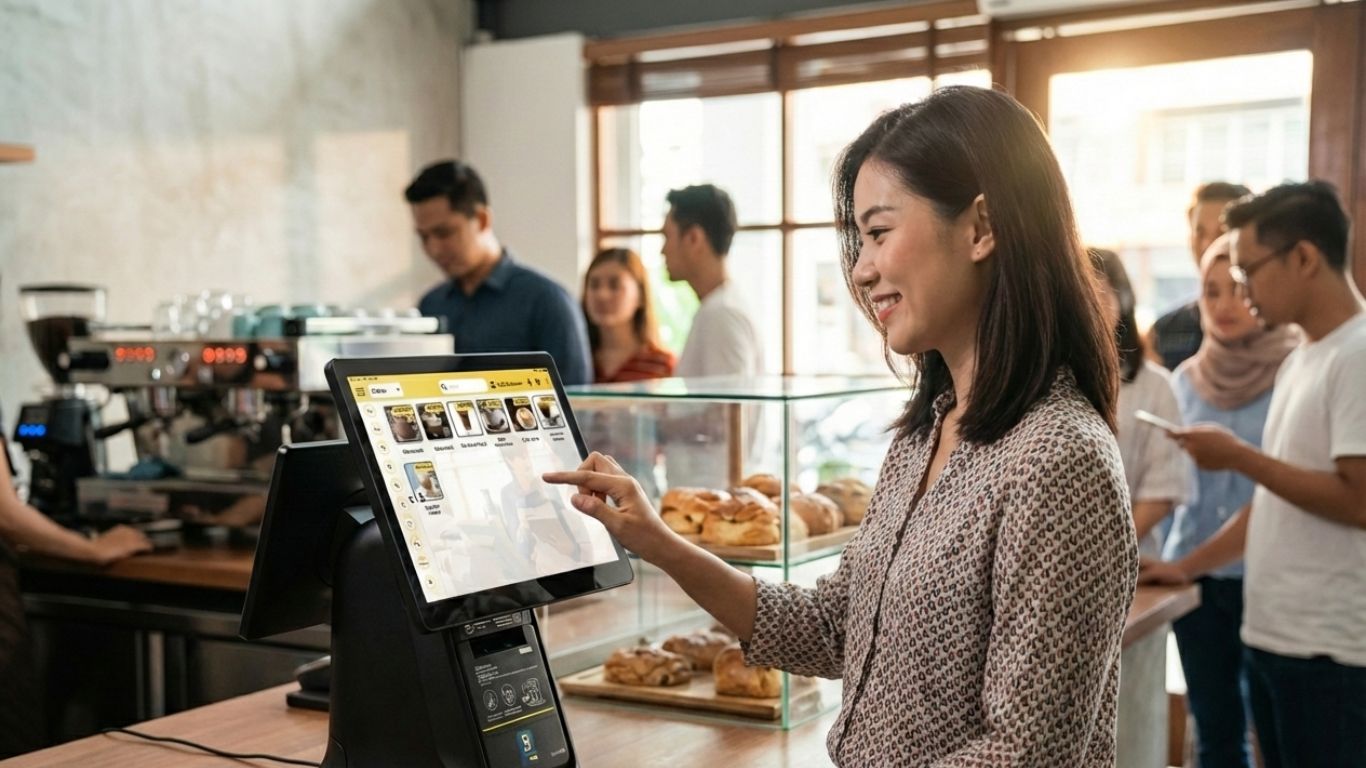
BigPOS offers comprehensive unified commerce capabilities specifically designed for Malaysian retailers expanding into social commerce channels like TikTok Shop.
BigPOS Integration Capabilities
E-Commerce Platform IntegrationBigPOS Web Admin integrates with major e-commerce platforms, providing a centralized hub for managing both physical store operations and online marketplaces including TikTok Shop.
Flexible Data SynchronizationBusiness owners can configure BigPOS to sync critical business data:
- Inventory levels – Real-time stock updates across all channels
- Pricing – Maintain consistent or channel-specific pricing strategies
- Sales data – Consolidated reporting across TikTok Shop and in-store transactions
- Customer information – Unified customer profiles for personalized engagement
Sync Configuration Options:
- Real-time synchronization – Instant updates across all channels (recommended for TikTok Shop live selling)
- Batch processing – Scheduled sync intervals for lower transaction volumes
The choice between real-time and batch processing depends on your business volume and operational needs. For retailers engaging in TikTok Shop live commerce, real-time sync is essential to prevent overselling during high-velocity sales events.
Setup and Training Timeline
- Initial setup and configuration: ~60 minutes
- Comprehensive staff training: 2-3 hours
- Total time to operational readiness: 1 day
Technical Requirements
- Preferred: Wired LAN connection for stable, uninterrupted sync
- Alternative: High-speed WiFi with reliable signal strength
- API-enabled architecture for seamless platform connections
Step 3: Implement Inventory Synchronization
Real-time inventory sync forms the backbone of unified commerce. Without it, retailers face the overselling nightmare that plagued early TikTok Shop adopters.[11]
BigPOS Inventory Management Best Practices:
Real-Time Sync Configuration
Configure BigPOS to automatically deduct inventory counts across all channels when sales occur on any platform—whether in-store, TikTok Shop, or other marketplaces. This prevents overselling during live shopping events when orders flood in rapidly.
Multi-Location Inventory Tracking
BigPOS supports multiple store locations managed through a single Web Admin interface. This enables:
- Location-specific inventory views
- Ship-from-nearest-store fulfillment
- Inventory balancing across locations
- Centralized stock visibility
BIG Inventory App Integration
Leverage BigPOS’s BIG Inventory app for simplified inventory management:
- Multi-location stock tracking
- Low-stock alerts and reorder notifications
- Product variant management
- Barcode scanning support
- SKU-level tracking across channels
Buffer Stock Management
Set aside a small percentage of inventory (5-10%) as a buffer to absorb brief sync delays during transaction processing. Business owners must manually sync transactions on BigPOS terminals to ensure real-time inventory visibility.
Automated Low-Stock Alerts
Configure alerts through BIG Inventory app that notify purchasing teams when inventory falls below predetermined thresholds, preventing stockouts that damage TikTok Shop performance metrics.
Step 4: Establish Order Management Workflows
TikTok Shop orders must flow seamlessly into your existing fulfillment process.
BigPOS Order Processing Workflow
For F&B businesses, BigPOS offers a streamlined online ordering system:
1. Embed BigPOS’s online delivery URL directly into your website or TikTok Shop profile
2. When customers place orders, they’re sent directly to the BigPOS app
3. Orders automatically fire to relevant departments for preparation
4. Staff selects delivery method (merchant’s own driver or customer self-pickup)
5. Inventory automatically adjusts upon order completion
Menu Customization Support (F&B)
BigPOS Pro handles menu modifications and customizations when Web Admin entries are configured correctly, perfect for F&B businesses taking TikTok Shop orders with special requests.
Service Level Agreements (SLAs)
TikTok Shop requires non-pre-sale orders to be dispatched within 2 working days, with sellers maintaining a Late Dispatch Rate (LDR) below 4%. Your BigPOS system should track fulfillment timelines and alert teams when orders approach SLA deadlines.[18]
Step 5: Configure Customer Data Unification
A unified commerce platform maintains single customer profiles that aggregate data from all interactions—whether customers shop via TikTok, visit physical stores, or browse your website.[9][6]
BigPOS Customer Data Management
B Reward Loyalty ProgramBigPOS’s B Reward app enables unified loyalty programs across all channels:
- Single point system for TikTok Shop and in-store purchases
- QR code membership scanning at POS
- Tiered rewards programs (Bronze, Silver, Gold, Platinum)
- Omnichannel redemption capabilities
- Automated engagement campaigns
BIG Analytics for Data-Driven DecisionsTrack customer behavior and sales performance across all channels:
- Real-time sales dashboards
- Channel performance comparison (TikTok Shop vs. in-store)
- Customer behavior insights
- Profitability analysis by product/category
- Cross-channel purchase patterns
Implementation Steps:
- Create unified customer IDs linking TikTok Shop accounts to BigPOS customer records
- Sync purchase history across all channels through Web Admin
- Aggregate loyalty points earned from any touchpoint via B Reward
- Enable customer service teams to view complete interaction history
- Personalize marketing based on cross-channel behavior
Privacy and Compliance Considerations
Malaysia’s Personal Data Protection Act (PDPA) governs how businesses handle customer information. When synchronizing customer data across channels, ensure:[14]
- Explicit consent for data collection and usage
- Transparent privacy policies explaining data handling
- Secure data storage and transmission protocols
- Customer access to their data and deletion rights
- Regular audits of data practices
BigPOS: Your Complete TikTok Shop Integration Solution
Why BigPOS for TikTok Shop Integration?
BigPOS provides a comprehensive unified commerce platform specifically designed for Malaysian retailers operating across physical stores and social commerce marketplaces.
Cloud-Based ArchitectureBigPOS enables real-time data synchronization across locations and channels, essential for TikTok Shop integration where legacy on-premise systems struggle with API connections required for social commerce.
Multi-Channel Inventory ManagementBigPOS tracks inventory across all sales channels—physical stores, e-commerce, TikTok Shop, other marketplaces—from a single Web Admin interface. Real-time data synchronization updates stock levels instantly across all connected platforms when business owners sync transactions on terminals.
Order Management CapabilitiesBigPOS handles orders originating from any channel with clear workflows for fulfillment, returns, and customer service. This is particularly critical for TikTok Shop orders that need to integrate seamlessly with existing store operations.
E-Invoice ComplianceWith Malaysia’s mandatory e-invoicing implementation rolling out through 2026, ensure your POS system supports e-invoice generation and submission to the Inland Revenue Board of Malaysia (IRBM). Businesses with annual turnover between RM5-25 million must comply by July 1, 2025, with smaller businesses following in 2026.[15][16]
BigPOS for Malaysian Retail Sectors
Ideal Retail Businesses:
- Fashion and apparel – Manage variants, seasonal pricing, unified customer profiles
- Mini marts and convenience stores – Multi-location inventory, rapid checkout
- Sundry shops – Simplified digitalization for traditional retailers
- Pet supply stores – Product variant tracking, loyalty programs
- Specialty boutiques – Personalized customer service across channels
F&B Business Applications:BigPOS serves F&B businesses of all sizes with specialized features:
- Online ordering integration – Direct URL embedding for seamless order flow
- Menu customization – Handle modifications through Web Admin configuration
- Delivery management – Support for own drivers and customer self-pickup
- Table reservations with pre-orders – Available for BigPOS Pro merchants
- Order routing – Automatic firing to kitchen/preparation departments
Target F&B Sectors:
- Cafes and coffee shops
- Restaurants (casual to semi-fine dining)
- Ghost kitchens and cloud kitchens
- Bakeries and pastry shops
- Catering services
- Food courts and hawker digitalization
BigPOS Ecosystem for Unified Commerce
B Reward App – Customer loyalty across all channels
- Unified loyalty points for TikTok Shop and in-store purchases
- Automated rewards and promotions
- Customer engagement tracking
- Birthday/anniversary campaigns
BIG Inventory App – Simplified inventory management
- Multi-location stock tracking
- Low-stock alerts and reorder notifications
- Product variant management
- Barcode scanning support
BIG Analytics App – Data-driven decision making
- Real-time sales dashboards
- Channel performance comparison
- Customer behavior insights
- Profitability analysis by product/category
Conclusion
TikTok Shop’s explosive growth in Malaysia presents an unparalleled opportunity for forward-thinking retailers. However, capturing this opportunity requires more than simply creating a TikTok Shop account—it demands a comprehensive unified commerce strategy that seamlessly integrates social commerce with existing retail operations.
By connecting TikTok Shop with BigPOS’s cloud-based unified commerce platform, implementing real-time inventory synchronization, unifying customer data across channels through B Reward, and optimizing for live commerce, Malaysian retailers can deliver the seamless experiences today’s consumers expect.
Why BigPOS for TikTok Shop Integration:
- Proven track record with businesses from small F&B outlets to semi-fine dining restaurants, and traditional retailers embracing digitalization
- Comprehensive ecosystem – POS, B Reward loyalty, BIG Inventory management, and BIG Analytics in one platform
- Rapid deployment – 60-minute setup with 2-3 hour training gets you operational in one day
- Flexible synchronization – Choose real-time sync for live commerce or batch processing for standard operations
- Multi-location support – Manage inventory and orders across multiple stores from single Web Admin
- Local expertise – Designed for Malaysian market with understanding of local business needs
- Scalable solution – Grow from one channel to full omnichannel without switching systems
The retailers who act decisively to build these integrated systems with BigPOS will capture disproportionate market share, while those who delay risk operational chaos and customer dissatisfaction during live shopping events.
The path forward is clear: embrace unified commerce with BigPOS, integrate TikTok Shop thoughtfully, and position your retail business for sustained growth in Malaysia’s rapidly evolving digital economy. With TikTok Shop projected to continue its remarkable trajectory and Malaysian consumers increasingly expecting seamless cross-channel experiences, the time to build your unified commerce strategy is now.
Ready to transform your retail operations with TikTok Shop integration? Contact BigPOS today for your free demo. With comprehensive training, rapid deployment, and the complete ecosystem of B Reward, BIG Inventory, and BIG Analytics, BigPOS empowers Malaysian retailers to thrive in the social commerce era.