


Bank Negara Malaysia E-Money Regulations for POS Systems: What Business Owners Must Know
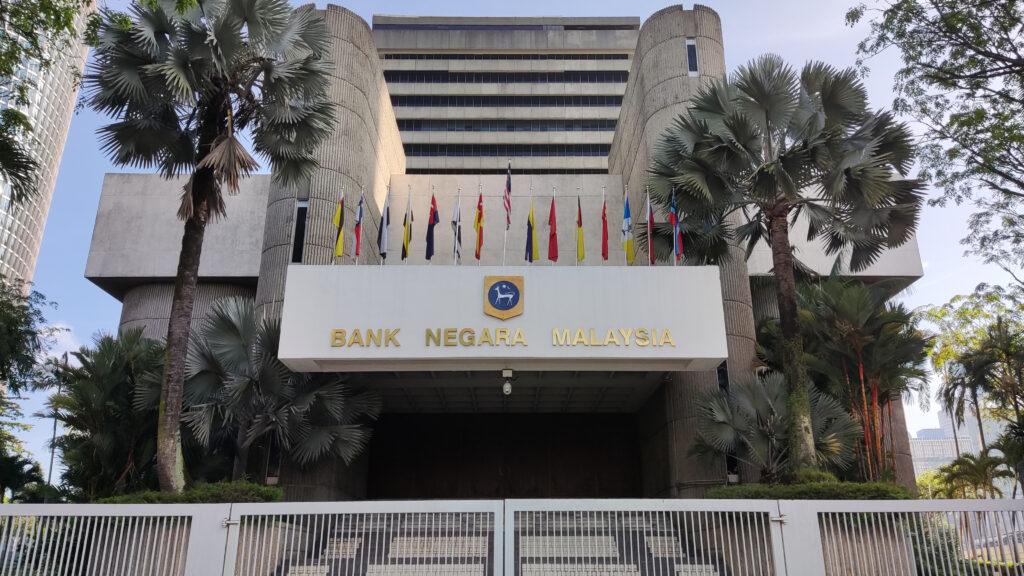
As Malaysia’s digital economy rapidly evolves, electronic money (e-money) usage is becoming a core part of daily transactions, including through point-of-sale (POS) systems. With this growth, Bank Negara Malaysia (BNM) has introduced comprehensive regulatory standards to ensure that e-money services remain safe, transparent, and fully compliant. For business owners, accountants, and tax consultants navigating this landscape, understanding BNM’s updated e-money regulations is essential—not just to avoid penalties but to build trust with customers and ensure smooth operations.
This article unpacks Bank Negara Malaysia’s e-money regulatory framework for POS systems in 2025, covering capital requirements, customer fund protection, KYC/AML compliance, governance expectations, and practical implications for POS vendors and users—all while demonstrating how BIG POS helps simplify compliance and reporting.
Understanding Bank Negara Malaysia’s E-Money Regulatory Framework
Bank Negara Malaysia’s revised Electronic Money policy, which took effect on January 31, 2025, tightens anti-money laundering and counter financing of terrorism (AML/CFT) safeguards for electronic money issuers (EMIs), including integrated POS systems offering e-wallet or stored value functionalities. The policy’s objectives are to protect consumer funds, detect fraudulent activities early, and impose clear governance and operational expectations on licensees.[1][2][3][4]
E-money issuers are categorized by wallet type and issuer size, with larger “Eligible EMIs” facing more stringent capital, operational, and governance requirements than smaller providers or limited-purpose wallets. The revised policy document supersedes the 2022 guidelines and excludes limited-purpose EMIs, which are now subject to separate exemption orders issued in 2024.[3][4][5]
RM5 Million Capital Requirement and What It Means for POS Providers
A critical requirement is the capital adequacy standard. EMIs classified as “Eligible EMIs” must maintain a minimum capital of RM5 million or 8% of their outstanding e-money liabilities, whichever is higher. This financial buffer ensures issuers are equipped to meet redemption demands and protect customer funds against insolvency risks.[6][7][3]
Standard or smaller-scale EMIs must hold a minimum of RM1 million or 8% of liabilities. For POS system providers who issue e-money directly or collaborate with EMIs, strict adherence to these capital standards is mandatory for license retention and regulatory compliance.[7][6]
Example: A POS provider handling RM50 million in stored value liabilities must maintain RM5 million capital (as 8% of RM50 million is RM4 million, which is less than RM5 million minimum).[6]
Customer Fund Protection Mechanisms
Protecting stored customer value is fundamental to BNM’s framework. Licensed EMIs must:
- Segregate customer funds from operational accounts to prevent misuse or loss during financial difficulties[8][9][3]
- Implement robust transaction monitoring and fraud detection protocols[1][3]
- Ensure IT infrastructure security with audit trails and controls preventing unauthorized transactions[3]
Non-bank e-money issuers are specifically required to deposit funds collected from customers in trust accounts with licensed banking institutions. This safeguarding mechanism ensures that consumer funds remain protected in case an issuer encounters financial distress or ceases operations.[9][3]
Such measures bolster consumer confidence, safeguarding money deposited through POS e-wallet functions against operational or cyber risks.[9]
KYC and AML Compliance: Shielding Against Financial Crime
KYC (Know Your Customer) and AML (Anti-Money Laundering) compliance constitute the backbone of BNM’s e-money regulation. Issuers must:[1]
- Conduct comprehensive identity verification at onboarding, leveraging e-KYC measures such as biometric and liveness checks[10][1]
- Screen all customers against national and international sanctions lists and politically exposed persons (PEP) databases[11][1]
- Monitor transactional behavior continuously, with automated alerts for suspicious activities[1]
- Periodically update customer profiles, especially for high-risk accounts[1]
The consequences of non-compliance are severe. Recent enforcement actions demonstrate BNM’s commitment to these standards. TNG Digital was fined RM600,000 for failing to screen customers against sanctions lists, allowing two sanctioned individuals to register for e-wallet accounts. Similarly, Alipay Malaysia faced a RM340,000 penalty for failing to update its sanctions database, disrupting customer account screening, and delaying the freezing of funds linked to a listed entity.[12][13][14][15][16]
POS systems integrated with e-money features must support these compliance processes smoothly. Failure leads to enforcement actions, including fines, license suspension, and personal liability for responsible officers.[12][1]
Governance and Licensing: Accountability at Every Level
BNM requires EMIs to demonstrate transparent governance with defined accountability structures. Essential expectations include:[3][1]
- Strong board oversight and active senior management engagement on AML/CFT risks[3][1]
- Appointment of competent compliance officers and ongoing employee training programs[1]
- Implementation of internal controls, independent audits, and compliance reviews[3][1]
Eligible E-Money Issuers must have a board of directors that includes at least one-third independent members, and must establish separate audit and risk management committees to oversee financial stability and operational integrity. The policy also prohibits active politicians from holding senior positions in e-money firms.[3]
To obtain and maintain a license, POS vendors involved in e-money transactions must meet these governance standards, ensuring risks are managed effectively.[17][1]
Business Continuity and Consumer Protection Requirements
The revised policy mandates that e-money issuers develop a comprehensive business continuity management framework. Issuers must establish a business continuity plan that can identify potential disruptions, set recovery objectives, and outline strategies to ensure uninterrupted service.[18][3]
Furthermore, each issuer must maintain a valid exit strategy for three years, detailing how operations will be wound down in an orderly manner while protecting customer funds and ongoing transactions.[3]
For consumer protection, the policy introduces several safeguards:
- Clear refund policies ensuring disputed transactions or account closures result in refunds within 14 days[3]
- Wallet limits above RM5,000 require explicit approval from BNM[7][3]
- Mandatory membership in the Financial Ombudsman Scheme (FOS) to provide consumers with dispute resolution avenues[19][20][3]
Compliance Implications for POS Providers and Business Owners
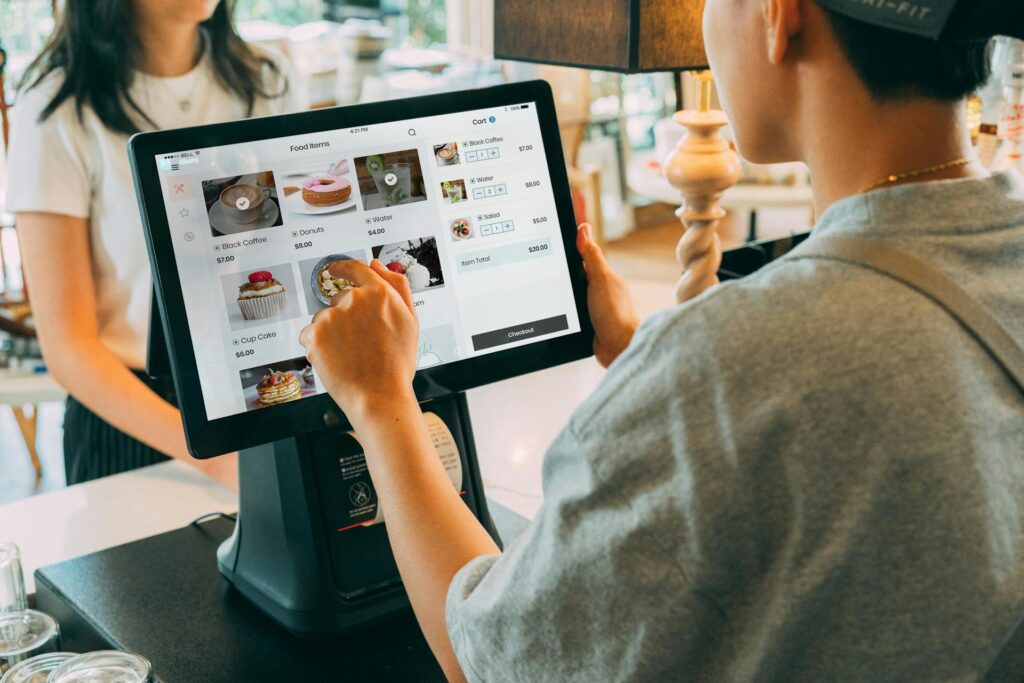
POS systems incorporating e-money features must align with BNM’s robust regulatory framework. They need to partner with compliant EMIs, embed seamless KYC/AML functionalities, and guarantee the protection of stored customer funds.[1][3]
The enforcement landscape shows BNM’s serious approach to compliance. Beyond the major cases involving TNG Digital and Alipay Malaysia, smaller operators like Merchantrade Asia (fined RM29,000) and JAGS Money (fined RM6,000) have also faced penalties for sanctions screening failures. These cases demonstrate that BNM’s enforcement extends across all scales of operation.[21]
For business owners, selecting a POS system ready for e-money regulations mitigates compliance risks and streamlines financial reporting obligations.[3]
Why BigPOS is the Smart Choice for Compliance and Efficiency
BigPOS is engineered to meet Malaysia’s dynamic regulatory environment:
- E-Invoice Ready: Generate and submit instantly LHDN-compliant e-invoices directly from your POS — no extra apps or manual reconciliations needed
- Regulatory Compliance Support: Integrated features to aid KYC/AML compliance obligations embedded in BNM’s e-money rules[1][3]
- Customer Fund Assurance: Designed following BNM’s guidelines for secure, segregated transactions to protect stored value[9][3]
- Simplified Operations: Reduces manual reporting headaches so business owners can focus on growth
By choosing BigPOS, businesses unlock not only operational efficiency but also peace of mind that their POS transactions are fully compliant with Malaysian e-money regulations.
Practical Steps for Compliance: Quick Checklist for Business Owners
- Verify your POS provider’s licensing status and capital adequacy[17][6]
- Ensure your POS system supports e-KYC and ongoing AML monitoring[10][1]
- Confirm that customer funds are segregated and protected[9][3]
- Train staff in AML/CFT awareness and reporting[1]
- Regularly review transaction reports for irregularities[1]
- Use POS software integrated with instant e-invoicing for tax reporting
Frequently Asked Questions (FAQs)
Q: Does my POS system need to be licensed as an e-money issuer?
A: Only if it directly issues e-money or holds stored value. Otherwise, it must partner with a licensed EMI compliant with BNM’s regulations.[6][17]
Q: How does BigPOS support KYC compliance?
A: BigPOS integrates with KYC verification tools and supports transaction monitoring modules aligned with BNM guidelines.[10][1]
Q: What are the penalties for non-compliance?
A: Penalties range from warnings and fines to license suspension and personal liability for directors in severe cases. Recent fines have ranged from RM6,000 for smaller violations to RM600,000 for major sanctions screening failures.[14][21][12]
Conclusion
Bank Negara Malaysia’s strengthened e-money regulations reflect the critical need for secure, compliant digital payments integrated with POS systems. For business owners, accountants, and tax consultants, staying informed and choosing the right POS solution is crucial to meeting capital, KYC/AML, and governance standards.[2][6][3][1]
The enforcement actions taken against major players like TNG Digital and Alipay Malaysia demonstrate that compliance is not optional but essential for sustainable operations in Malaysia’s digital payment ecosystem. BNM’s approach shows that penalties are calibrated based on the severity of breaches, past compliance records, and corrective actions taken.[13][21][14][12]
BigPOS stands out as a reliable partner that simplifies compliance and boosts operational efficiency with innovations like seamless e-invoice generation. Switching to BigPOS today ensures businesses remain ahead of regulatory demands and nurture trusted customer relationships while avoiding the significant penalties that have befallen non-compliant operators in the Malaysian e-money sector.
⁂
- https://www.flagright.com/post/bnms-e-money-exposure-draft-aml-cft-implications-for-fintechs-and-wallet-providers
- https://www.bernama.com/en/news.php?id=2388245
- https://fintechnews.my/47925/digital-banking-news-malaysia/bnm-e-money-policy-impact-issuers-consumers/
- https://www.thestar.com.my/business/business-news/2025/01/31/bank-negara-issues-revised-policy-document-on-e-money
- https://www.rahmatlim.com/publication/articles/30451/bank-negara-issues-revised-policy-document-on-electronic-money
- https://prifinance.com/en/payments/malaysia-emi-license/
- https://www.rahmatlim.com/perspectives/articles/23492/mykh_new-bank-negara-policy-document-updates-e-money-regulatory-framework
- https://www.imf.org/-/media/Files/Publications/DP/2021/English/EMPSOUPEA.ashx
- https://www.afi-global.org/sites/default/files/publications/piwg_knowledge_product_e-money_trust_and_model_trust_deed.pdf
- https://www.skrine.com/insights/alerts/april-2024/bank-negara-malaysia-issues-revised-policy-documen
- https://www.flagright.com/post/best-aml-compliance-tools-for-malaysias-digital-asset-innovation-hub
- https://fintechnews.my/54303/regtech-fintech-regulation-malaysia/bnm-alipay-fine/
- https://www.thestar.com.my/business/business-news/2025/09/24/bank-negara-fines-syarikat-s-m-ziaudeen-alipay-malaysia-for-non-compliance
- https://fintechnews.my/39390/e-wallets-malaysia/tng-digital-fined-rm600000-for-onboarding-sanctioned-individuals/
- https://theedgemalaysia.com/node/681175
- https://www.malaymail.com/news/money/2023/09/01/tng-digital-fined-rm600000-by-bnm-for-allowing-sanctioned-individuals-to-use-its-ewallet/88502
- https://www.tetraconsultants.com/jurisdictions/register-company-in-malaysia/emi-license-in-malaysia/
- http://www.shearndelamore.com/alerts/2023/Legal_Updates_Jan_2023.pdf
- https://www.skrine.com/insights/alerts/april-2025/bank-negara-issues-policy-document-on-complaints-h
- http://www.fmos.org.my/en/
- https://fintechnews.my/50454/regtech-fintech-regulation-malaysia/bnm-fine-merchantrade-jags/
- https://digitalfinance.worldbank.org/subtopics/capital-requirements
- https://www.skrine.com/insights/alerts/february-2025/bank-negara-malaysia-issues-revised-policy-documen
- https://www.skrine.com/insights/alerts/january-2025/recent-developments-in-the-regulatory-framework-fo
- https://lpplaw.my/insights/e-articles/e-money/
- https://sumsub.com/blog/malaysian-aml-requirements/
- https://ewhallet.com/blog/post/e-wallet-laws-and-regulations-in-malaysia
- https://www.sanctionscanner.com/blog/kyc-requirements-in-malaysia-1179
- https://ybcase.com/en/fintech/emi-licenzia-v-malajzii
- https://www.feedzai.com/bnms-electronic-banking-fraud-regulations/
- https://www.cgap.org/sites/default/files/publications/Technical-Note-Safeguarding-Funds-Dec-2018_1.pdf
- https://www.lh-ag.com/wp-content/uploads/2023/03/Legal-Herald-March-2023-Art.-1.pdf
- https://www.kychub.com/blog/aml-in-malaysia/
- https://fintechnews.my/27578/e-wallets-malaysia/bank-negara-malaysia-bnm-e-money-regulation/
- https://jfatwa.usim.edu.my/index.php/jfatwa/article/download/638/580/3218
- https://www.elibrary.imf.org/view/journals/001/2023/123/article-A001-en.xml
- https://www.drewnetworkasia.com/newsroom/malaysia-exposure-draft-on-business-continuity-management/
- https://www.instagram.com/p/DO-r-iRDL4t/
- https://www.afi-global.org/sites/default/files/publications/2019-09/AFI_DFS_Emoney_AW_digital_0.pdf
- https://www.skrine.com/insights/alerts/december-2022/bank-negara-malaysia-issues-policy-document-on-bus
- https://theedgemalaysia.com/article/bnm-emoney-liabilities-have-grown-significantly-rm500m-rm16b
- https://www.scoop.my/news/110114/tng-digital-fully-commits-to-comply-with-bnm-standards/
- https://www.ijmar.org/v6n4/19-015.html
- https://www.pcalaw.com.my/2021/12/09/e-money-overview/
- https://www.touchngo.com.my/news/tng-digital-leads-the-charge-in-accountability-and-cooperates-with-bnm-to-uphold-highest-compliance-standards
- https://www.skrine.com/insights/alerts/january-2025/financial-markets-ombudsman-service-launched
- https://www.businesstoday.com.my/2023/09/03/why-tng-digital-was-fined-rm600000-by-bank-negara/