

Building Customer Loyalty Malaysian Style: Cultural Considerations for SME Success
Understanding and respecting Malaysian cultural values is the foundation of building lasting customer relationships. For SME owners, operations managers, and HR departments, implementing culturally-aware loyalty strategies can significantly differentiate your business in Malaysia’s competitive market. This comprehensive guide explores how cultural considerations can transform your customer loyalty approach while maximizing the potential of your POS system.
The Malaysian Cultural Foundation: Why It Matters for Customer Loyalty
Malaysian society operates on deeply ingrained cultural principles that directly impact customer expectations and loyalty behaviors. The concept of “face-saving” (maintaining dignity and avoiding embarrassment) influences every customer interaction, while the collectivist nature of Malaysian society emphasizes group harmony and relationships over individual transactions.[1][2][3]
Research shows that 85% of Malaysian consumers prefer shopping at stores offering loyalty programs, but success requires more than just points and rewards—it demands cultural sensitivity and understanding. Malaysia’s loyalty market has recorded a strong CAGR of 18.2% from 2020 to 2024, with projections estimating it will reach US$784 million by 2029.[4][2][6]
Understanding the Face-Saving Culture
The concept of “muka” (face) is fundamental to Malaysian business interactions. Malaysians strive to maintain face and avoid shame in all circumstances, which directly impacts how they engage with brands and loyalty programs. Malaysians prioritise face and feelings. Face places a huge role in Malaysian culture; people are very sensitive to any perceived slight on their honour.[2][1]
Customer Service Implications
Face-saving is particularly crucial in business contexts as causing your Malaysian counterpart to lose face may influence the outcome of your future business dealings. This cultural dimension means:[1]
- Never publicly correct or embarrass customers
- Use indirect communication when addressing issues
- Provide private channels for complaint resolution
- Acknowledge customer status and importance publicly
Loyalty Program Design
- Ensure reward redemption processes preserve customer dignity
- Avoid creating situations where customers might feel embarrassed about their loyalty status
- Design tiered programs that celebrate achievements rather than highlighting deficiencies
- Feedback should optimally be given privately to the individual[3]
The Power of Hospitality: Food Culture and Business Relationships
Malaysian business culture places immense importance on hospitality, particularly through food. This extends beyond restaurants to all business types—even government agencies and corporate meetings typically include refreshments as a sign of respect and welcome.[4][5]
Practical Applications for SMEs
For Retail Businesses:
- Offer complimentary drinks or snacks during peak shopping periods
- Consider seasonal treats during major festivals
- Create comfortable waiting areas with refreshments
For Service Businesses:
- Welcome clients with traditional Malaysian hospitality
- Use communal dining concepts for customer events
- Incorporate food-based rewards in loyalty programs
For Restaurants and F&B:
- Understand the cultural significance of sharing meals[4]
- Design family-style loyalty rewards that encourage group dining
- Respect dietary restrictions based on religious and cultural practices
Leveraging Malaysia’s Multi-Ethnic Diversity
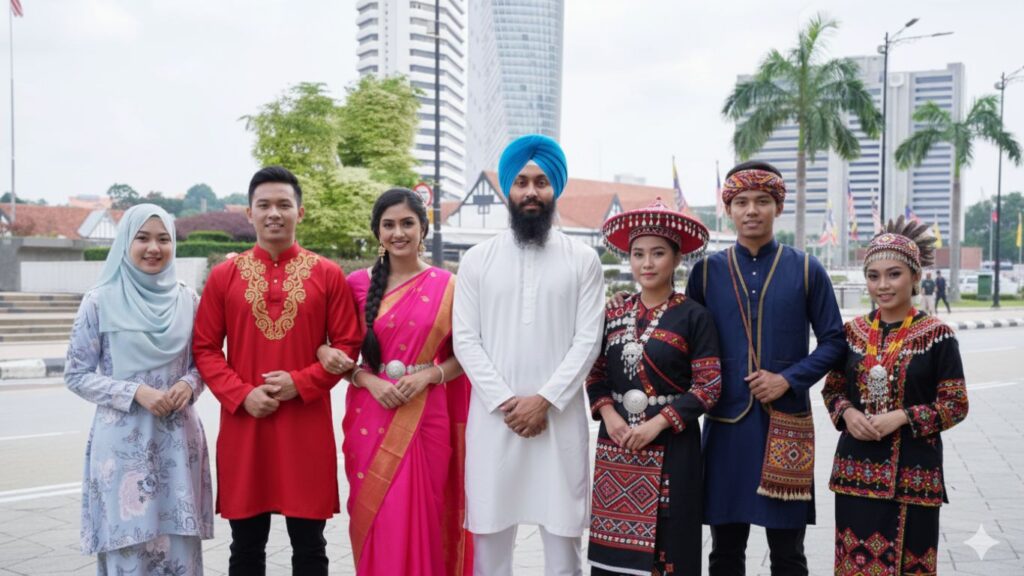
(Image generated using Google Gemini)
Malaysia’s multi-ethnic composition (Malay, Chinese, Indian, Sikh, Kadazan, Dusun, Bidayuh, etc communities) creates unique opportunities for inclusive loyalty programs. Each community brings distinct preferences and traditions that smart businesses can incorporate into their customer engagement strategies.[2][4]
Festival-Based Engagement Strategies
Malaysian consumers respond strongly to culturally relevant seasonal campaigns. The proximity of major festivals like Chinese New Year and Hari Raya creates unique opportunities for cross-cultural engagement.[6][7][8]
Hari Raya Considerations:
- Emphasize community, forgiveness, and new beginnings
- Design rewards around family gatherings and gift-giving
- Use green and gold color schemes
- Offer Halal-certified products and services
Chinese New Year Strategies:
- Focus on prosperity, luck, and family reunion themes
- Implement red and gold promotional materials
- Search activity begins 5 weeks before the festival[7]
- Offer bundle deals for family purchases
Deepavali and Christmas Integration:
- Celebrate the festival of lights with illumination-themed promotions
- Create inclusive campaigns that acknowledge all communities
- Design reward structures around gift-giving traditions
Language and Communication Preferences
Malaysia’s linguistic diversity requires thoughtful communication strategies. While English serves as a business lingua franca, incorporating local languages demonstrates cultural respect.[3][2]
Multi-Language Loyalty Communications
- Provide loyalty program materials in Bahasa Malaysia, English, and Chinese
- Train staff in basic greetings across all major languages
- Use culturally appropriate imagery and messaging
- Ensure customer service can accommodate language preferences
Digital Integration with Cultural Sensitivity
Modern Malaysian consumers, particularly those under 30, are highly tech-savvy, yet they maintain strong cultural values. This creates opportunities for digitally-enabled, culturally-aware loyalty programs that combine convenience with cultural respect.[2]
QR Code and Mobile-First Approaches
Research indicates Malaysian customers prefer convenience and accessibility in loyalty programs. The integration with POS systems becomes crucial for seamless experiences while maintaining cultural sensitivity.[9][14]
Personalization with Cultural Context
While Malaysian consumers want personalized offers, they also value cultural appropriateness. Successful personalization considers:[2]
Cultural Timing
- Avoid promotions during religious observances
- Time campaigns with cultural calendar events
- Respect fasting periods with appropriate messaging
- Celebrate cultural milestones with relevant offers
Culturally-Relevant Rewards
- Offer experiences that align with Malaysian lifestyle preferences
- Include family-oriented rewards recognizing collectivist values
- Provide options that respect dietary and religious requirements
- Design social sharing opportunities that enhance rather than threaten face
Overcoming SME Challenges with Cultural Solutions
Malaysian SMEs face significant challenges in customer engagement and loyalty platform integration. Understanding cultural preferences can help overcome these obstacles while building stronger customer relationships.[10]
Building Trust Through Transparency
The cultural emphasis on trust and relationships means transparency becomes crucial for loyalty program success. Malaysian customers prefer:
Clear Communication:
- Explicit point earning and redemption rules
- Transparent pricing without hidden fees
- Open communication about data usage
- Regular updates about program benefits and changes
Relationship Building:
- Personal recognition of loyal customers
- Staff training in cultural sensitivity
- Consistent service quality across all interactions
- Problem resolution that preserves customer dignity
Creating Community Through Loyalty
The collectivist nature of Malaysian society creates opportunities for community-building loyalty strategies. This cultural understanding can transform traditional loyalty programs into community-centered experiences.[11]
Group-Based Rewards
- Family account systems that accumulate points collectively
- Referral programs that reward community building
- Group dining discounts and shared experiences
- Corporate account programs for workplace communities
Technology Integration with Cultural Sensitivity
For SMEs using modern POS systems, cultural considerations should guide implementation:
User Experience Design
- Simple, intuitive interfaces that respect different comfort levels with technology
- Multi-language support for a diverse customer base
- Clear visual hierarchy that doesn’t overwhelm
- Offline capabilities for areas with connectivity issues
Staff Training Components
- Cultural sensitivity education for all customer-facing staff
- Conflict resolution techniques that preserve face
- Understanding of major cultural festivals and their significance
- Communication skills for diverse linguistic backgrounds
E-Invoice Integration and Cultural Considerations
With Malaysia’s e-invoicing mandate taking effect in phases from 2025-2026, SMEs must balance compliance requirements with cultural sensitivity. The implementation timeline affects businesses differently:[12][13]
- July 1, 2025: Businesses with annual turnover of RM5-25 million[13]
- January 1, 2026: Businesses with annual turnover of RM1-5 million[13]
This digital transformation presents opportunities to enhance customer trust through transparent, error-free invoicing that respects customers’ time and dignity—key cultural values in Malaysia.
Measuring Success Culturally
Traditional loyalty metrics may not capture the full picture in Malaysian contexts. Consider measuring:
Relationship Indicators
- Customer referral rates within cultural communities
- Participation in cultural celebration campaigns
- Cross-cultural customer acquisition
- Long-term retention across different ethnic groups
Cultural Engagement Metrics
- Response rates to culturally-themed promotions
- Social media engagement during festivals
- Customer feedback on cultural sensitivity
- Staff cultural competency assessments
The Future of Malaysian Customer Loyalty
As Malaysia continues its digital transformation journey, successful businesses will be those that combine technological innovation with deep cultural understanding. The loyalty market in Malaysia is expected to increase from US$406 million in 2024 to reach US$784 million by 2029, creating significant opportunities for culturally-aware SMEs.[14][2]
The integration of advanced POS systems with culturally-aware loyalty strategies creates competitive advantages that go beyond mere convenience. Modern POS systems offer seamless integration with loyalty programs, real-time tracking, and personalized promotions, while cultural intelligence ensures these technological capabilities resonate with Malaysian values.[9]
Key Success Factors for Malaysian SMEs
The key lies in recognizing that while technology enables efficiency and innovation, cultural sensitivity builds the emotional connections that drive true customer loyalty. For Malaysian SMEs, this means designing loyalty programs that not only track purchases and manage rewards but also celebrate the rich cultural diversity that makes Malaysia unique.
By respecting face-saving principles, embracing the importance of hospitality, acknowledging multi-ethnic diversity, and integrating these considerations with modern technology, SMEs can build loyalty programs that resonate deeply with Malaysian consumers. This cultural approach to customer loyalty doesn’t just increase repeat business—it transforms customers into advocates who proudly recommend your business within their communities.
The businesses that thrive in Malaysia’s evolving marketplace will be those that understand technology is the enabler, but culture is the differentiator. With the right combination of innovative POS systems and cultural intelligence, Malaysian SMEs can build customer loyalty that stands the test of time while driving sustainable business growth in an increasingly competitive market worth nearly US$1 billion by 2028.[14]
Conclusion
To wrap up, the right POS system should do more than just process payments—it should be your partner in growth. With integrated loyalty features, you can:
- Automate rewards right at the checkout.
- Gather data on what your customers actually love.
- Boost repeat visits without the extra admin work.
Are you looking for a POS system that has built-in loyalty features? Look no further than BIGPOS. We make it easy to manage your store and keep your customers coming back for more.
- https://mzv.gov.cz/file/1033199/doing_business_in_malaysia.pdf
- https://commisceo-global.com/articles/communication-in-malaysian-business-culture/
- https://cultureboleh.com/the-art-of-giving-feedback-to-malaysians/
- https://eventflare.io/expert-advice/kuala-lumpur/essential-cultural-tips-for-hosting-events-in-kuala-lumpur
- https://www.worldbusinessculture.com/country-profiles/malaysia/business-meals-entertaining/
- https://www.newnormz.com.my/festive-season-campaign/
- https://www.thinkwithgoogle.com/intl/en-apac/marketing-strategies/search/how-to-capture-malaysians-attention-during-chinese-new-year/
- https://www.marketing-interactive.com/malaysia-deepavali-ad-spend-2024
- https://www.itguidance.com.my/retail-pos-system/membership-loyalty-program
- https://repo.uum.edu.my/29724/1/MMJ 27 2023 59-82.pdf
- https://www.science-gate.com/IJAAS/Articles/2017-4-12(2)/48%202017-4-12-pp.287-297.pdf
- https://altomate.io/my/blog/malaysia-e-invoicing-regulations-2025-what-smes-must-know/
- https://www.hasil.gov.my/en/e-invoice/implementation-of-e-invoicing-in-malaysia/e-invoice-implementation-timeline/
- https://www.businesswire.com/news/home/20241029770004/en/Malaysias-Loyalty-Program-Market-Projected-to-Surpass-US$1-Billion-by-2028-Reveals-2024-Market-Intelligence-Report—ResearchAndMarkets.com